
Introduction
When you walk into a stone yard or showroom and see rows of marble slabs marked with codes, stickers and labels, it can feel like reading a foreign language. Even seasoned homeowners can pause wondering: What does “Grade A” mean? What’s “Grade C”? Understanding marble slab grades explained is essential if you want to select the right stone for your home. This guide will demystify the labeling, the grading system, how to read the slab tags, and how to compare quality so you choose with confidence. From identifying key quality grades to decoding slab labels and understanding the significance of each mark, this homeowner’s guide walks you through everything you need.
Why Marble Grades and Labels Matter
Marble slabs differ significantly in quality, durability, aesthetic appeal and cost. Grading and labeling help you:
- Understand quality levels (fewer flaws, better finish)
- Compare cost vs value across slabs
- Ensure you’re matching the correct grade for your project (flooring vs wall vs countertop)
- Protect yourself from mismatched expectations—slab quality affects look, longevity and maintenance
Industry sources identify common grades (for example Grade A, B, C, D) that classify marble based on imperfection levels, veining consistency, finish and structural integrity.
Labels on slabs encode lots of information—origin, batch, grade, finish, size—so reading them correctly ensures you don’t buy blindly.
Understanding Common Marble Grading Systems
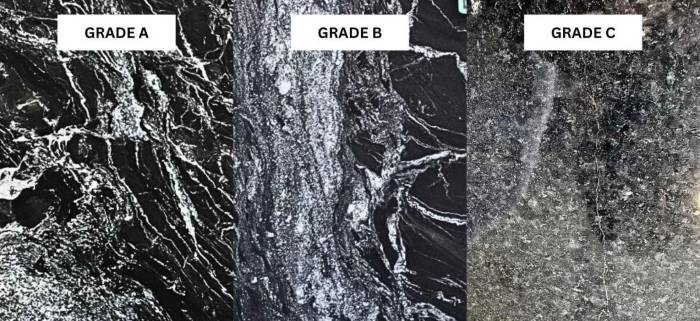
Grade A – Premium Quality
Grade A slabs represent the highest quality. They have uniform colour, minimal visible defects, consistent veining, and a top‑grade finish. These are often used in luxury installations.
Grade B – Standard Quality
Grade B typically shows minor natural flaws—small fissures, slight pitting or minor colour variation. Still high quality, but a step down from premium.
Grade C (Commercial Quality) & Below
Grade C or Grade D slabs show more visible imperfections: voids, heavy veining, patch‑fills or more prominent flaws. These can work for non‑critical zones or decorative features but may require more maintenance.
Remember: higher grade equals higher price—but doesn’t always mean the most dramatic veining; aesthetic preference still plays a role.
How to Read Marble Slab Labels: Key Elements to Spot
Every slab should carry a label or tag. Here’s what to look for and decode:
Slab Identification Number / Batch Code
This unique code lets you trace the slab back to quarry, batch and ensures matching across leftovers or future orders.
Grade Label
Look for terms like “Grade A”, “Premium”, “Standard”, “Grade C”. This directly indicates the quality classification.
Size & Thickness
Typical slabs might be 20‑30 mm thick (2 cm or 3 cm) or sometimes thinner for cladding; thickness affects durability and finish level.
Finish & Cut Type
The label may state “Polished”, “Honed”, “Brushed”, or “Matt”. Finish impacts look, maintenance and suitability for floors vs walls.
Origin/Quarry
Information like “Makrana, Rajasthan”, “Carrara, Italy” or “Vietnam White” appears. Origin influences price, colour and quality.
Additional Notes or Warnings
Some labels show “Check Vein Match”, “Limited Stock”, “Structural Fill” or “Repairable Voids”. These alert you to potential suitability issues.
Label Interpretation and Practical Tips for Homeowners
Match Grade to Location
- For flooring in living areas: Opt for Grade A or B to ensure durability and appearance.
- For feature walls or accents: Grade B or even Grade C may suffice if aesthetics are the main aim.
- For high‑traffic floors or commercial zones: Choose slabs that explicitly state suitability for heavy use.
Texture and Finish Aligning With Use
A polished finish might look great but can show wear. On floors, consider honed or textured finishes for practicality. Ensure the finish type written on the label matches your intended use.
Inspect Adjacent Slabs in Same Batch
Slabs from the same batch code should match colour and veining. If label says batch #1234 and adjacent slabs vary widely, question the mismatch.
Ask About Hidden Repairs or Filler
If label or tag mentions “Repairable Voids” or “Patch‐fill”, it implies the slab may have had flaws. Visual inspection is essential—light walk around, check edges and back.
Take Home Label Copy and Photo
Photograph the slab label and mark the slab physically if possible (via chalk). Keep a record so you can refer back if matching or ordering later.
Comparative Table – Grades at a Glance
| Grade | Typical Defects | Best Use Case |
| A | Minimal flaws, uniform colour | High‑end floors, visible surfaces |
| B | Minor pitting, slight veining or fill | Residential floors, walls |
| C/D | Noticeable voids, heavy fissures, repair fill | Accent walls, low‑traffic zones |
Understanding this simple table helps you quickly know if a slab being offered matches the quality you need.
Checklist for Homeowners Before Buying
- Verify that slab label shows grade, finish, size, batch.
- Inspect front surface and edges for cracks, chips, large filler areas.
- Match multiple slabs from same batch for consistency.
- Confirm the finish is suitable—polished vs honed vs textured.
- Ask the supplier for disclosure of any repairs or fills.
- Ensure transportation, handling and storage conditions are proper (warping or damage in transit shows low quality).
- Keep slab label photo and batch number for future reference or repairs.
Conclusion
Selecting the right marble slab isn’t just about colour and price—it’s about understanding what’s behind the label: the grade, quality, finish and batch. With marble slab grades explained, you gain the knowledge to shop confidently, avoid costly mistakes, and select a slab that looks stunning and stands the test of time. From decoding slab labels to comparing grade tiers and inspecting batches, this homeowner’s guide gives you the clarity to make the right choice.
For premium marble, expert advice and a wide selection tailored to your home, visit Chandan Marbles. With showrooms on Nagar Road, Kharadi, Marketyard in Pune and also in Silvassa, our team is ready to assist you in reading labels, selecting grades and installing with precision. Feel free to call us at +91 8888843560 or visit our website at www.chandanmarbles.com.


