
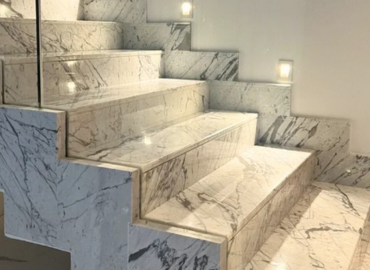
Selecting the best marble for staircases is a decision that blends both visual elegance and practical performance. Stairways are high-traffic, high-risk zones in homes and commercial spaces—so you need stone that not only looks great but holds up under daily use and offers safety features like a non-slip marble finish. In this comprehensive guide, we’ll walk through the most suitable marble types, safety considerations for marble stairs India, tips for marble flooring for steps, inspiring marble staircase design ideas, and key queries around durability and maintenance.
1. Why Choosing the Right Marble for Stairs Is Critical
Staircases are unique architectural zones: they link levels, bear dynamic loads, and often sit in both formal and utilitarian spaces. When selecting marble you must balance:
- Safety: Slips, falls or edge-chips are major risks.
- Durability: Treads must resist abrasion, foot traffic and damage.
- Design impact: The staircase often becomes a visual focal point.
- Installation: Tolerance for movement, edge finishes, nosing.
Good choices deliver long-term satisfaction. Poor ones can lead to cracking, slipping, colour fade, or costly replacements.
2. Which Marble Types Work Best for Staircases
Not all marble types are equal when it comes to stair use. Some stand out:
- Premium Italian whites like Carrara marble or Calacatta marble are popular for stairs thanks to smooth texture and polish-ability.
- Indian stones such as Makrana marble are highly regarded for strength and low absorption—important for stair durability.
- Avoid extremely soft or highly veined marbles for treads unless they’re reinforced and properly finished.
Focus on stone with fine grain, consistent colour, good hardness and low porosity to maximize performance on stairs.
3. Key Safety Features: Slip-Resistance, Nosing & Maintenance
When installing marble stairs, the following considerations ensure safety and comfort:
- Non-slip marble finish: Rather than high-gloss polish on treads, consider a honed or leathered finish which offers better grip and less glare.
- Nosing profiles: Edges should be rounded or bull-nose finished. This reduces tripping risk and prevents chips.
- Edge contrast: A subtle colour or material difference on the edge helps visibility of each step—important for low-light conditions.
- Maintenance regime: Use pH-neutral cleaners, reseal if required and avoid slick waxes. Polished marble may show scratches or water spots faster on stair treads.
By integrating these elements, you create a staircase that’s both stylish and safe.
4. Durability & Installation Tips for Marble Staircases
Durability is intertwined with installation quality and usage design:
- Use marble slabs of uniform thickness; inconsistencies can cause tread or riser cracking.
- Ensure substrate is rigid—no flex or bounce in the stairs.
- For heavy traffic areas, use thicker slabs (e.g., 20–30 mm) and ensure proper anchoring.
- Choose a finish and stone that resists scratching and abrasion: daily foot traffic, shoes, and dust can wear low-quality stone quickly.
Installation and workmanship often matter more than simply picking the most expensive marble.
5. Design Ideas for Marble Staircases in Indian Homes
Here are some notable marble staircase design ideas for Indian homes and commercial spaces:
- Floating marble stairs with glass railings: Pair a light stone like Carrara or white Makrana for an open, modern look.
- Dual tone treads and risers: Use a darker marble tread and lighter riser to visually separate each step and add drama.
- Vein-matched marble runs: Continuous veining across treads and risers makes the staircase feel like a sculpture.
- Outdoor marble staircase: Choose textured or leathered finish and low-porosity stone for balconies or garden steps.
- Statement monochrome: Use dark Italian Nero or black marble for high-impact luxury eyes.
Whatever your choice, match the stone type and finish to your space and usage patterns.
6. Choosing The Right Finish For Stair Applications
The stone finish influences both aesthetics and practicality:
- Polished finish: Offers high reflectivity and luxury feel, but can be slippery and more prone to scratches on treads.
- Honed finish: A matte surface that reduces glare, improves slip resistance and offers better everyday performance.
- Leathered/structured finish: Soft texture, good grip, hides footprints or fingerprints—great for luxury but safer stairs.
- Textured or flamed finish: Least common indoors, but useful for outdoor or semi-exposed stairs.
For the best marble for staircases, many designers favour a non-gloss finish on treads and polished or semi-polished finish on risers and walls for a balanced look.
7. Maintenance and Long-Term Care of Marble Staircases
Even the best marble needs care:
- Sweep regularly to remove grit and dust that scratch the surface.
- Use pH-neutral stone cleaners; avoid harsh acids or alkalis.
- Re-seal stone according to manufacturer guidance (often every 1-2 years for high use).
- Address chips and edge damage promptly to prevent further cracking.
- In staircases exposed to sunlight or open air, choose low-porosity stone to minimise discolouration.
By following these steps, you retain both the look and durability of your staircase material.
8. Cost Considerations and Value for Homeowners
Investing in the best marble for staircases is about value, not just cost:
- Premium stone like Italian or top Indian marble will cost more—both material and labour.
- But, given staircases are highly visible and used daily, opting for good quality can increase property value and longevity.
- By selecting durable stone and proper finish, you avoid early replacement and repair costs.
- Ensure your budget includes accurate installation, edge treatment, nosing and sealing—not just slab cost.
Spending wisely on stairs ensures your investment delivers over decades.
9. Common Mistakes to Avoid When Using Marble on Stairs
When choosing marble stairs, watch out for:
- Using overly polished or highly reflective stone for treads in wet areas—risk of slips.
- Choosing a stone with very dramatic veining for narrow stairs—visual chaos or mismatch across slabs.
- Neglecting nosing details—sharp edges or mismatched profiles cause accidents.
- Installing thin or undersized slabs in heavy-traffic zones—they crack or wear quickly.
- Choosing outdoor marble without adequate slip resistance or sealing.
Avoiding these errors helps achieve both safety and elegance.
10. How to Work With Suppliers for Best Results
To ensure you get the best result:
- Ask for samples of the exact finish and stone you intend to use on treads and risers.
- Insist on matching lots for all treads and risers—ensures consistent colour and veining.
- Request specification sheet: slab thickness, porosity rating, source quarry.
- Discuss finish—ensure you get the agreed finish (honed, leathered, etc.).
- Plan edge treatments, nosing profiles and installation details at the outset.
Choosing a trusted supplier and installer matters greatly when using the best marble for staircases.
Conclusion
Selecting the best marble for staircases involves balancing style, safety, durability and cost. Whether you’re installing a sleek modern flight or a classic grand staircase, prioritise the right stone type, finish (preferably non-slip where applicable), strong substrate and quality installation. Your staircase can become a focal point of elegance and functionality—and deliver value for years.
For expert guidance, premium stone selection and craftsmanship, visit Chandan Marbles. We have showrooms on Nagar Road, Kharadi, Marketyard in Pune and also in Silvassa. Feel free to call us at +91 8888843560 or explore our collection at www.chandanmarbles.com.
Design your staircase with confidence—style and safety combined.


