
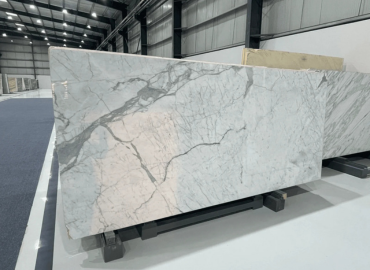
When selecting marble for your home or commercial space, understanding marble grade quality is essential. Natural stone like marble varies widely in appearance, durability and performance. By recognising marble quality standards, knowing how to judge marble slab quality, and being alert to common imperfections in marble, you’ll be better equipped to choose high-grade marble rather than a lower-quality option that may disappoint over time. Let’s dive into how marble is graded, what features matter, and how to avoid costly mistakes.
1. What Does “Marble Grade Quality” Mean?
The term “grade” in marble refers to a classification of quality based on aesthetic appearance, structural soundness, and finish. A higher grade means better consistency in colour and pattern, fewer defects or fissures, superior processing and finishing, and longer lifespan. In India this often correlates with quarry source, colour uniformity, thickness, finish quality and scarcity of variation. Paying attention to marble grading India means you’re investing in stone that will hold value, retain beauty and outperform lesser slabs.
2. Key Quality Parameters for Marble
2.1 Colour Uniformity & Veining
A major element in quality is consistent colour and pattern. High-grade marble typically shows even background tone with minimal blotches or heavy contrast unless that is part of its character. Veining should flow naturally across adjacent slabs, with no abrupt breaks. Disruptions in pattern or inconsistent colours can signal lower grade or mixed slab batches and compromise the look when installed across large areas.
2.2 Surface Finish & Thickness
The finish of the completion—whether polished, honed or leathered—matters. A polished surface that reflects light evenly is a hallmark of good finishing. Uneven gloss, dull patches or visible polishing marks indicate lower processing standards. Thickness also matters: properly processed slabs maintain uniform thickness so installing pieces lies flat, avoiding cracking and trip hazards. These factors tie into overall marble quality standards.
2.3 Structural Soundness & Absorption
Quality marble should be structurally sound. It should not contain major cracks, cavities, or weakly bonded veins. Highly porous stone will absorb moisture and stain more easily, reducing durability. Indian stones such as the renowned Makrana marble are noted for low absorption and long-term performance. Checking for water absorption and scratching resistance is practical when assessing how to judge marble slab quality.
2.4 Quarry Reputation & Provenance
A slab’s origin influences its grade. Stones from well-known quarries with consistent quality control are higher grade compared with lesser-known sources. In India, certain brands and regions—like Makrana in Rajasthan—are accepted as premium due to their crystalline structure and durability. Provenance can therefore be a reliable indicator of grade quality.
3. How to Inspect a Marble Slab Before Purchase
3.1 Visual & Physical Inspection
Start with a slab un-crated. Look for visible cracks, fissures, uneven surfaces or repair patches. Run your hand over the surface to feel for polishing consistency. A good finish should feel smooth with no depressions or coarse texture. Slides or edges should be straight and corners sharp.
3.2 Water Drop Test & Porosity Check
Place a single drop of water on the slab and observe how fast it’s absorbed. Quality marble will either not absorb it quickly or show minimal darkening. If it soaks in rapidly or leaves a stain, it’s likely lower grade or already saturated with prior use.
3.3 Batch Matching & Vein Continuity
When buying multiple slabs for a large area, ensure they come from the same batch. Veins and background tone should flow between slabs so that installed surfaces look uniform. Poor-grade slabs often have “lot” mismatches which impair the final visual appearance.
3.4 Edge & Thickness Uniformity
Check that all slabs are of consistent thickness, and edge length is uniform. Uneven thickness makes installation more difficult and may lead to substrate issues. A consistent dimension is often a mark of better processing, contributing to higher grade.
4. Common Imperfections in Marble & How They Affect Quality
4.1 Cracks, Fissures & Vein Breaks
While minor natural veins are acceptable, extensive cracks or fissures reduce structural integrity. They may be filled but future chipping may occur. Identifying such flaws helps avoid long-term complications.
4.2 Stains, Water Marks & Colour Variations
Marble that shows previous staining, damp-marks or large variations in background colour may be older stock or lower grade. Some variation is natural, but chaotic or large discoloured areas indicate weaker quality.
4.3 Uneven Polishing & Surface Dull Spots
Lower grade slabs may have spotty polishing or inconsistent gloss. These are hard to rectify once installed and can make the surface look mismatched or aged prematurely.
4.4 High Absorption & Wispy Texture
Marble with high porosity or granular textures may absorb spills more easily, scratch more easily or wear faster. Knowing this helps you distinguish between top-grade stone and cheaper alternatives.
5. What Qualifies as “High Grade Marble” for Premium Projects
High grade marble typically exhibits the following hallmarks:
- Consistent and deep background colour with minimal visual faults.
- Fine, flowing veining rather than chaotic or blocky patterning.
- True precision processing: uniform thickness, edge clean-cut, high gloss polish or consistent finish per design.
- Low porosity, high hardness, and strong structural integrity.
- Reputation of source quarry and processing plant with documented performance or pedigree.
If a slab meets these criteria, it qualifies as high-grade marble, making it suitable for high-end interiors, commercial lobbies, luxury residences and prestige architectural applications.
6. Key Differences: Medium vs Economy Grades
Not all projects require premium stone and medium or economy grades serve well if expectations are aligned. In lower grades you might expect:
- Slight variations in colour or veining.
- Minor repair patches or consistent small fissures.
- Slightly lower polish quality or minor surface texture differences.
- Higher porosity or slightly thinner processing reducing price accordingly.
These are acceptable for many installations (e.g., service areas, less-visible floors) but you should be aware that lifespan may be shorter and maintenance will likely be higher.
7. Buyer Checklist for Marble Quality Assurance
Here’s a practical checklist:
- Inspect slab surface thoroughly for cracks, chips, stains.
- Check consistency of veining and colour across all slabs in your lot.
- Perform water drop test for absorption.
- Verify source and quality reputation of the quarry/brand.
- Ensure uniform thickness, straight edges and consistent finish.
- Ask for technical specs: absorption rate, Mohs hardness, prior usage or sample references.
- Match your project grade to usage: high grade for visible, high traffic and prestige areas—lower grade acceptable for secondary or utility zones.
By following this checklist you’ll make a much smarter purchasing decision aligned with marble grade quality.
Conclusion
Choosing marble is more than just selecting a colour and pattern—it’s about selecting the right quality for your project. By understanding marble grade quality, recognising marble quality standards, knowing how to judge marble slab quality, and being alert to imperfections in marble, you can choose high grade marble that will stand the test of time and deliver lasting elegance.
For premium marble and expert guidance, visit Chandan Marbles, located on Nagar Road, Kharadi and Marketyard in Pune, and also in Silvassa. Feel free to call us at +91 8888843560 or visit our website at www.chandanmarbles.com.


