
Introduction
When redesigning a kitchen, one of the most dramatic decisions you’ll make is flooring. Opting for Marble can instantly elevate the space — its natural veining, glossy finish, and timeless elegance add luxury and character. But is marble truly practical for kitchen floors? In this blog, we explore whether marble for kitchen floors is the right choice by examining its advantages and disadvantages, then offering maintenance tips to keep your marble looking pristine. With the right approach, you can combine style and function in your kitchen.
Why Choose Marble for Kitchen Floors?
Luxury Aesthetic & Unique Character
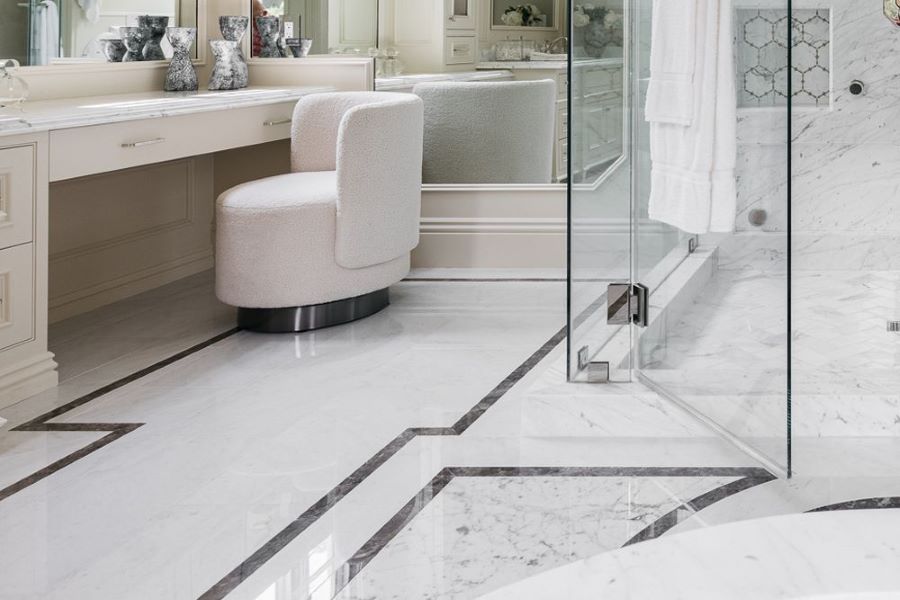
Marble stands apart because no two slabs are identical. Each piece features unique patterns and veins, giving your kitchen a one‑of‑a‑kind statement floor. Its polished surface reflects light and makes the space feel more open and upscale.
Good Thermal Properties
Marble naturally stays cool underfoot, which is a plus in warmer climates. It also responds well to radiant‑floor heating, offering comfortable underfoot warmth in cooler seasons.
Sustainable & Long‑Term Value
Natural stone is durable and when maintained properly, a marble floor can last for decades—adding value and sophistication to your home.
What Are the Cons of Marble in Kitchen Flooring?
Porosity and Staining Risk
Marble is porous and prone to absorbing liquids and stains from everyday kitchen spills like wine, tomato sauce or oil. Even sealed marble needs immediate spill clean‑up to prevent discoloration.
Scratches, Chips & Wear‑Out
Though durable, marble is softer than many stones and can scratch, chip or etch (especially from acidic foods) over time. These blemishes often stand out on polished surfaces.
Slippery When Wet and Cold Underfoot
High‑gloss marble can be slick in a kitchen environment where water and oils may drop on the floor. It also remains cool to the touch, which may feel uncomfortable in colder weather unless heated.
Higher Cost & Maintenance Requirements
Marble is typically more expensive than tile or vinyl options in both material and installation. Add to that the cost of sealing, cleaning and potentially refinishing over time.
Choosing the Right Marble for Your Kitchen Floor
Select a Honed or Matte Finish
To minimise slip risk and better hide scratches or etches, consider a honed or matte finish rather than ultra‑polished marble.
Prefer Neutral or Medium Veining Patterns
Busy or high‑contrast veining may show wear more quickly. Medium‑veined or neutral‑shore marble styles age more gracefully in kitchen traffic.
Check Density and Porosity
Look for marble with higher density and lower absorption rate—these slabs will perform better in wet or high‑traffic kitchen environments.
Keep Extra Slabs for Future Repairs
Because veins and colours vary, store extra slabs from the same batch for future patching or repairs. Matching later on is difficult.
Maintenance Tips for Marble Kitchen Floors
Daily Cleaning Routine
- Sweep or vacuum frequently to remove grit that can scratch the surface.
- Use a damp microfiber mop with a mild, pH‑neutral cleaner. Skip vinegar, bleach or acidic detergents—they can etch the marble.
Seal Regularly
Apply a high‑quality penetrating sealant after installation and reseal as recommended (usually annually or bi‑annually) to reduce absorption and staining risk.
Wipe Spills Immediately
Acidic drops (lemon juice, vinegar, wine) and liquids should be wiped up right away to prevent etching or permanent stains.
Protect High‑Traffic Areas
Use rugs or mats near sinks, cooktops or islands to reduce wear from movement and spillage.
Address Scratches or Trench Marks
Minor scratches can often be polished out with a professional service; for deeper damage, consult a stone‑care expert to restore the finish.
Temperature Care
If your kitchen is in a colder region, consider radiant heating or rugs—the naturally cool marble may feel uncomfortable when standing for long periods.
When Marble for Kitchen Floors Makes Sense
- You are designing a showpiece kitchen where aesthetics are paramount.
- You’re prepared for maintenance and willing to invest in sealing and care.
- Traffic is moderate rather than heavy cooking or family activity.
- You select a more durable, honed finish and high‑quality slab with low porosity.
If you prioritise ease of maintenance or have very heavy usage or children/pets frequenting the kitchen, you may want to evaluate alternatives like porcelain tile or engineered stone, which mimic marble’s look with less upkeep.
Conclusion
So, can you use marble for kitchen floors? Absolutely—but only with informed choices. Marble brings luxury, timeless design and long‑term value when selected, installed and maintained thoughtfully. Be mindful of its susceptibility to stains, wear and slip, and invest in the correct finish, sealant and daily care. If you’re looking for premium marble flooring backed by expert advice, visit Chandan Marbles. With showrooms located on Nagar Road, Kharadi, Marketyard in Pune and also in Silvassa, our team is ready to guide you to the perfect slab, finish and installation strategy for your kitchen. Feel free to call us at +91 8888843560 or visit our website at www.chandanmarbles.com


